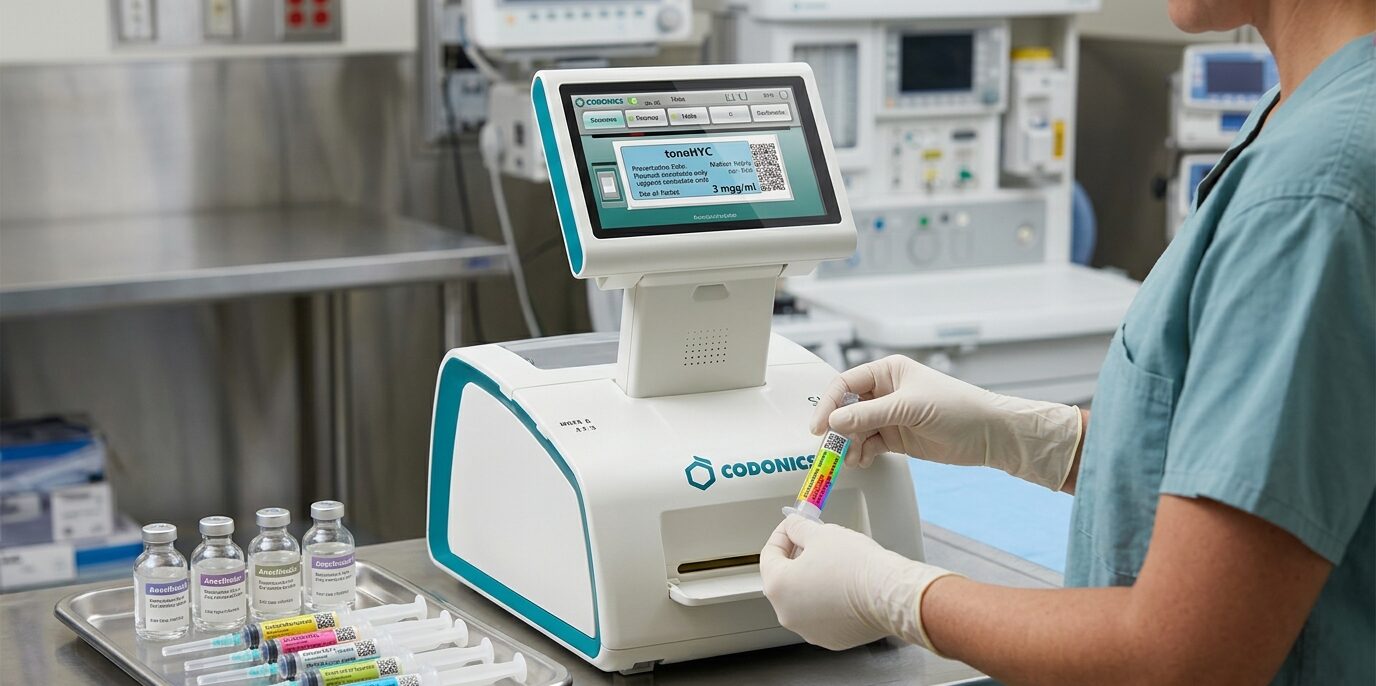

Hospital pharmacies use several types of labels to identify medications, communicate handling instructions, organize inventory, and support dispensing workflows. From auxiliary warnings to pharmacy barcode labels, each serves a different purpose.

Auxiliary medication labels provide additional instructions or warnings that may not appear prominently on the primary medication label.
You’ll find them on prescription bottles, medication containers, and packages prepared for dispensing. Common examples include:
Drug identification labels help pharmacy staff distinguish medications, concentrations, and prepared doses.
These pharmacy medication labels are commonly applied to syringes, vials, and other medication containers during preparation and dispensing. Depending on the application, they may include the drug name, concentration, expiration information, or space for handwritten details.
For example, a pharmacy preparing anesthesia medications may use preprinted drug labels for hospitals or pharmacies with designated spaces for concentration information.
Medication storage labels communicate where medications belong and how they should be stored or handled. Hospital pharmacies use these labels on medication containers, storage bins, shelves, and other supplies. They may identify:
Many hospital pharmacies use automated dispensing cabinets, compounding systems, and specialized printers that require labels with specific dimensions, printing methods, and other specifications.
We offer labels compatible with several pharmacy systems, including:
Before ordering, check your equipment model and existing label specifications to confirm compatibility.
Pharmacy barcode labels support electronic medication identification and tracking throughout hospital workflows.
Depending on the pharmacy’s software and equipment, barcodes may be used during inventory management, medication preparation, dispensing, and bedside medication administration.
For example, a barcode printed on a unit-dose medication package may allow staff to scan the medication as part of the hospital’s verification process. When purchasing pharmacy barcode labels, consider:
IV bag and compounding labels can provide space for medication names, concentrations, preparation details, patient information, and beyond-use dates, depending on the facility’s workflow.
Hospital pharmacies may use different formats for sterile compounding, batch preparation, or patient-specific IV medications. For example, patient-specific preparations may require additional identification fields to connect the medication with the intended recipient.
Every hospital pharmacy has its own labeling needs. We can help you find reliable labels that fit your pharmacy’s equipment, processes, and daily operations.
Explore our pharmacy labels to find the supplies your team needs. Not sure which labels to order? Contact us for help finding standard or custom labeling solutions for your pharmacy.